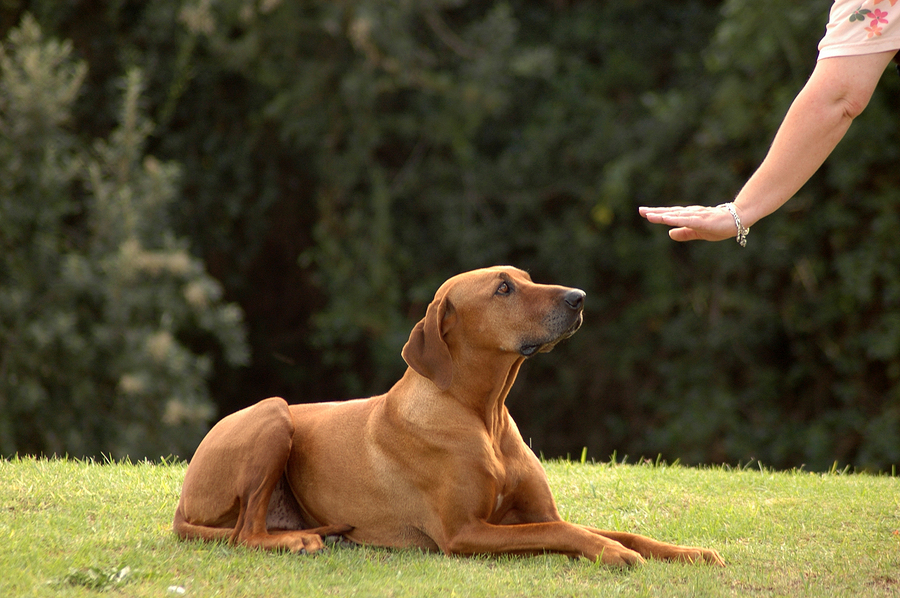
Here are some of my thoughts on how to make your training sessions successful:
Keep things simple at first. When starting to train a new behaviour begin in a location that has little or no distractions for your dog so he/she can be completely focused on you and the task at hand. Break the behaviour down into small components each one building on the previous one. Don't move onto the next step till the one before is robust. Keep sessions short and always end on a positive. Don't be tempted to push on based on a successful step.
Find a reward that is actually motivating for your dog, and not one you think is motivating for him or her. When in doubt test it out first and make sure your dog is interested in the reward. Remember rewards don't have to be food. A reward can be a pet or praise, it can be a sniff at a local lamp post where other dogs have been before, it can be a game with a toy....
Timing is everything. If you can successfully pair a reward with a behaviour your dog will very quickly learn to reproduce that behaviour for that reward. To do this you must be adept at spotting the correct behaviour and rewarding immediately. If you don't get the reward within a second or so your dog will not make the connection between the reward and the behaviour and so the training will not be successful. If late with a reward it is better not to give it as you could inadvertently reward the wrong behaviour.
The key to training is behaviours that are rewarded will be repeated, behaviours that have no reward will die away. So if you see your dog do something you like immediately reward it and your dog will likely repeat it. For behaviours you do not want try to find the reward in it for the dog and remove the reward. This behaviour should then decrease. The problem arises when the behaviour itself is the reward.
The steps to training behaviour are very simple. Step 1 is to get the dog to exhibit the behaviour. This can be done via luring, capturing or other methods. Step 2s to immediately reward the dog for performing the behaviour. Step 3 is to repeat until the behaviour is reliably repeatable, i.e. the dog performs it nine times out of ten. Once this is achieved, Step 4 is to link a queue, either a command or hand signal or indeed both to the behaviour. Step 5 is the one most owners/handlers are not aware of in my experience and that is to prove the behaviour. This simply means retraining the behaviour from scratch in as many different places or with as many different distractions as possible. Try not to change location and distraction level at the same time. This last step helps the dog generalise the behaviour to all places and situations and is very important.
Let me close this by saying training should be fun for both you and your dog. Please only use positive reinforcement techniques. Studies have shown punishment techniques are not as effective nor long lasting.